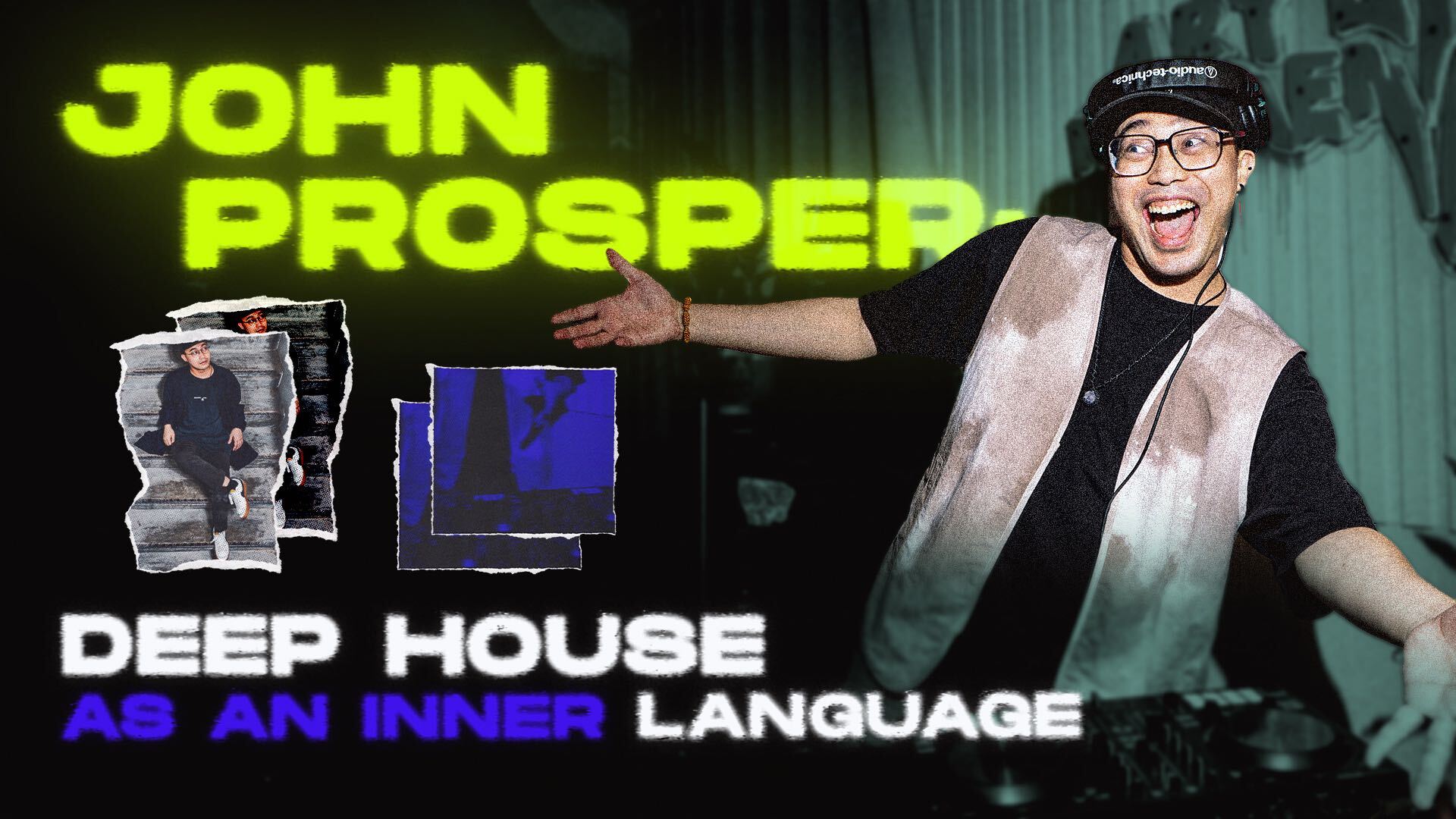
JOHN PROSPER: DEEP HOUSE AS AN INNER LANGUAGE
Every artist eventually arrives at the question of identity. For John Prosper, the answer wasn’t overcomplicated. “I wanted my creativity to prosper,” he says simply. “And it sounded cool.”
John Prosper started as a wish, a quiet intention for growth, for movement, for something in his life to expand beyond where it was. Over time, it became more than an alias.

Today, John Prosper makes Deep House, with touches of broken beat, soul, and ambient textures. He is affiliated with Padyak PH, loosely connected with Tera and Leg Room, but those labels only sketch the outline. The real work happens underneath.
He describes his tracks as wordless journals. “A lot of what I produce feels like audio journal entries,” he explains. “If I don’t have the opportunity to speak to someone about who I am, you can just play a track like Identity to the right person. They’ll know me.”
That early release, Identity, was a statement. A sonic self-portrait that is less about impressing a crowd and more about anchoring himself. The emotional release is always the point. Each EP begins with a feeling that needs somewhere to go.
FROM ARCADES TO CHICAGO
Prosper’s first exposure to electronic music wasn’t in a club, but an arcade.
Growing up in the US, he spent hours playing Dance Dance Revolution where electronic music pulsed through pixelated screens and arcade cabinets before he even knew what it was. Cartoon Network aired Interstella 5555 and UK Garage seeped into early 2000s pop culture, and the textures stuck.
By 2011, festival culture in the US was exploding. Tomorrowland streams, MTV reality shows, Dutch House dominating big stages. He started DJing then, playing EDM and commercial house in high school. When he moved to the Philippines the same year, he carried that sound with him.
He played in large clubs and lounges. Peak-time sets filled with heavy drops and for a while, it worked. But something shifted around 2014.
“I started looking forward to the opening DJ more than the headline set,” he admits
%20Medium.jpeg)
The early hours felt freer. Hiphop into Dancehall, melodic transitions, space to breathe. Around the same time, UK garage was resurfacing through artists like Disclosure. The syncopation, the chords, the Black voices carrying melody. It felt alive in a different way.
That curiosity led him backward. To Chicago House. To Soulful Deep House. To Masters at Work, Louie Vega, Kerri Chandler. Eventually to artists like Atjazz, Coflo, Leon Vynehall, Tomahawk Bang. Producers who treated Deep House as a personal language rather than a template.
“When you hear Atjazz, you know it’s him. When you hear Coflo, you know it’s him. Their culture bleeds into the music.” He began to understand that Deep House could carry identity. It could hold lineage. It could say something beyond the dance floor.
Then he found House Dance.
THE DANCE CHANGED EVERYTHING
Before he was a dancer, he was documenting the scene. He followed local House dancers around Manila with a camera, filming sessions, interviews, small gatherings. What he saw felt different from the nightlife he knew. He saw people moving because they needed to.
“It looked like so much fun,” he says. “Being behind the camera felt like a barrier.” He started learning Loose Legs from Youtube and the steps were addictive. He was already playing House music in lounges and now, his body understood it, too.
House Dance deepened his relationship with sound. It sharpened his ear for percussion, for swing, for space between beats. As a dancer, he learned to crave unpredictability. Tracks that invite interpretation instead of telegraphing the drop.
“When I produce now, I ask if I can dance to it,” he says. “As dancers, we get bored fast. We like sounds that can be interpreted, not predicted.”
House Dance also reframed responsibility. As an Asian American participating in a culture rooted in Black and Queer communities, he is conscious of being a guest. “I try to pay respect to the tradition. DJing goes beyond mixing tracks. You’re an arbiter of something that existed before you.”
For him, that means creating space–emotional space, physical space. A floor where expression is where people feel something deeper than the urge to just raise drinks.
PRODUCING BY INSTINCT
Prosper is not classically trained so he does not approach music very technically.
“I brute force things until they sound good,” he laughs. His childhood obsession with Samurai Champloo (2004) shaped more than he realized. The producer Nujabes layered ambient textures, jazz samples, birdsong, water – calm and introspective even when repetitive, and that atmosphere left a permanent mark.
“When I produce, I think of the ambiance first before the bassline.”
He builds tracks like paintings. Adding strokes. Removing them. Adding again. Sometimes he oversaturates and has to strip everything back to its essence. Mixing and mastering require technical discipline, but the heart of the process remains instinctive.
“I’m very vibes- and feelings-based,” he says. “At some point, I have to remind myself there are necessary elements to a track, but I’m guided by instinct.” His sporadic releases reflect that—he does not rush outputs, he releases when something feels complete enough to let go.
SHOWING UP
“John Prosper without House Dance would not exist.”
He says this without hesitation. The Philippine House Dance Community is young compared to scenes in Japan, the UK, or the US. There are fewer teaching infrastructures, fewer clear career paths. In the early days, it was just friends gathering in apartments or parks talking about House Music until sunrise and dancing for hours.
For him, showing up is simple because the culture healed him.
“Because of House Dance, I’m a better person than I was ten years ago,” he says.
He describes dance as confrontation. Music moves the body, but it also exposes the inner life. Some nights you can read someone’s emotional state through how they move. Stress, joy, exhaustion, clarity. It shows.
He has watched newer dancers grow lighter over time. Leave sessions smiling. Wake up with renewed energy. The transformation is subtle but real.
“House Dance Music makes us strong,” he says.
Giving back means DJing for the community. Playing music that respects the culture. Creating rooms where dancers feel seen.
MANILA AND THE MISSING BRIDGE
When asked about the unity of Filipino dance floors, his answer is measured.
He sees a gap between nightlife and the dance community. Underground scenes sometimes mirror commercial templates more than they challenge them. Some spaces feel underground for aesthetic rather than passion.
There are exceptions, of course. Deeply committed DJs and producers who care about the roots. But Deep House remains a hard sell. It does not carry obvious commercial appeal and he is fine with that.
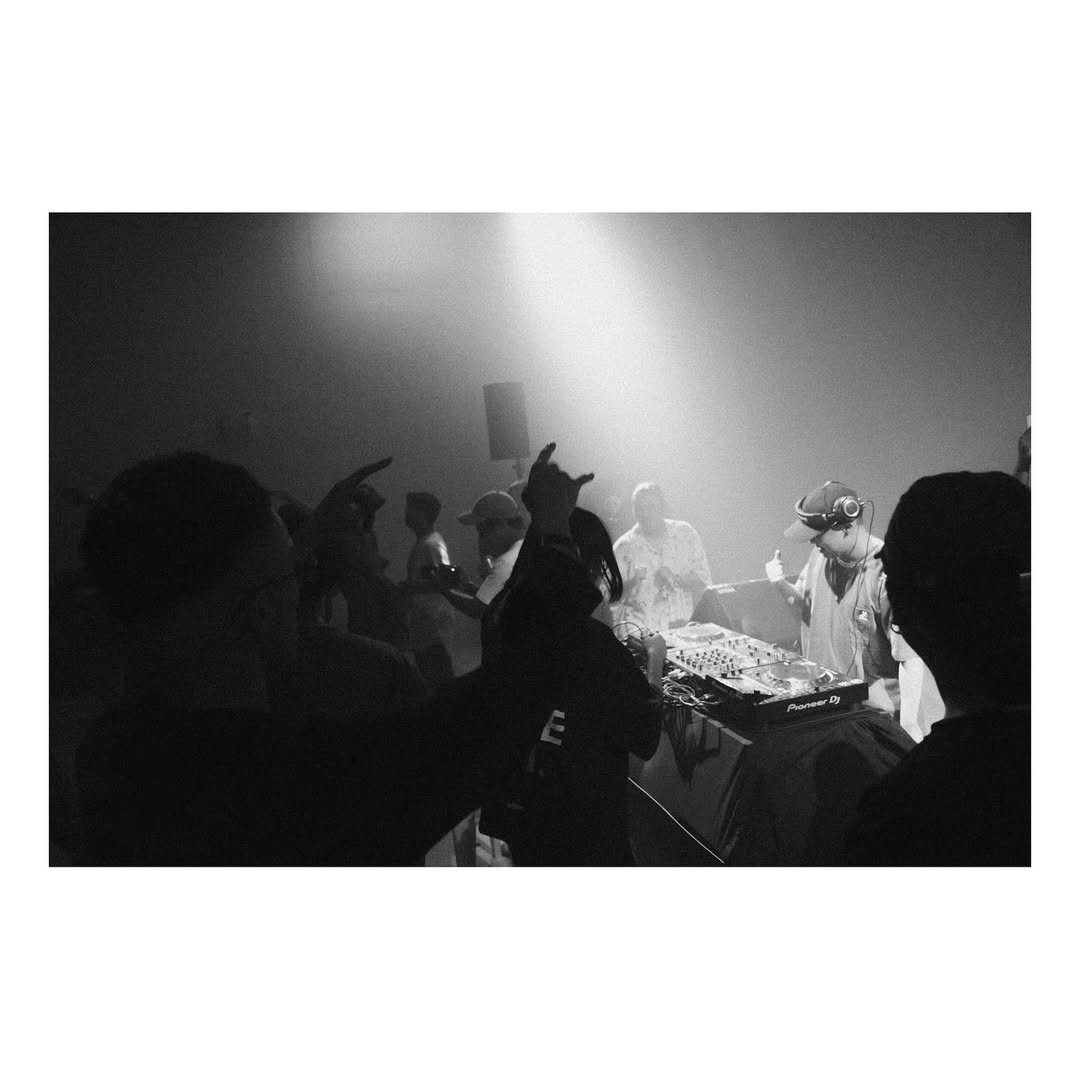
“I’m content in the underground scene,” he says. “If less than a hundred people show up, it means they really want to listen.” There is comfort in playing to people who choose to listen to his music intentionally.
THE NEXT CHAPTER
Prosper hopes to see more Filipino producers.
“There’s so much creativity here,” he says. “Philippine art is honest. There’s emotional release in it.” He believes that honesty can translate powerfully into electronic music. The country’s social, political, and economic realities create depth and he wants that depth reflected in House.
He is also not chasing legacy so there is no need to strategize in how younger producers will remember him.
“I’m not doing this to make an impact,” he says. “I’m doing this because it feels good. It makes my friends happy. It helps the [dance] community.” And if something lasts beyond him, that is a bonus.
For now, instinct tells him he is where he needs to be. In small rooms. In late-night conversations. In tracks that carry calm, introspection, and groove in equal measure.
John Prosper began as a wish for growth and years later, the wish is still unfolding.
Author:
Next Up