SUPER STARLET XXX AND THE SPACES WE BUILD
Ten years ago, That Elephant Party began with music.
There was a sound Shanai Gania wanted to hear through a space they wanted to exist. A version of nightlife that felt closer to the communities they were a part of.
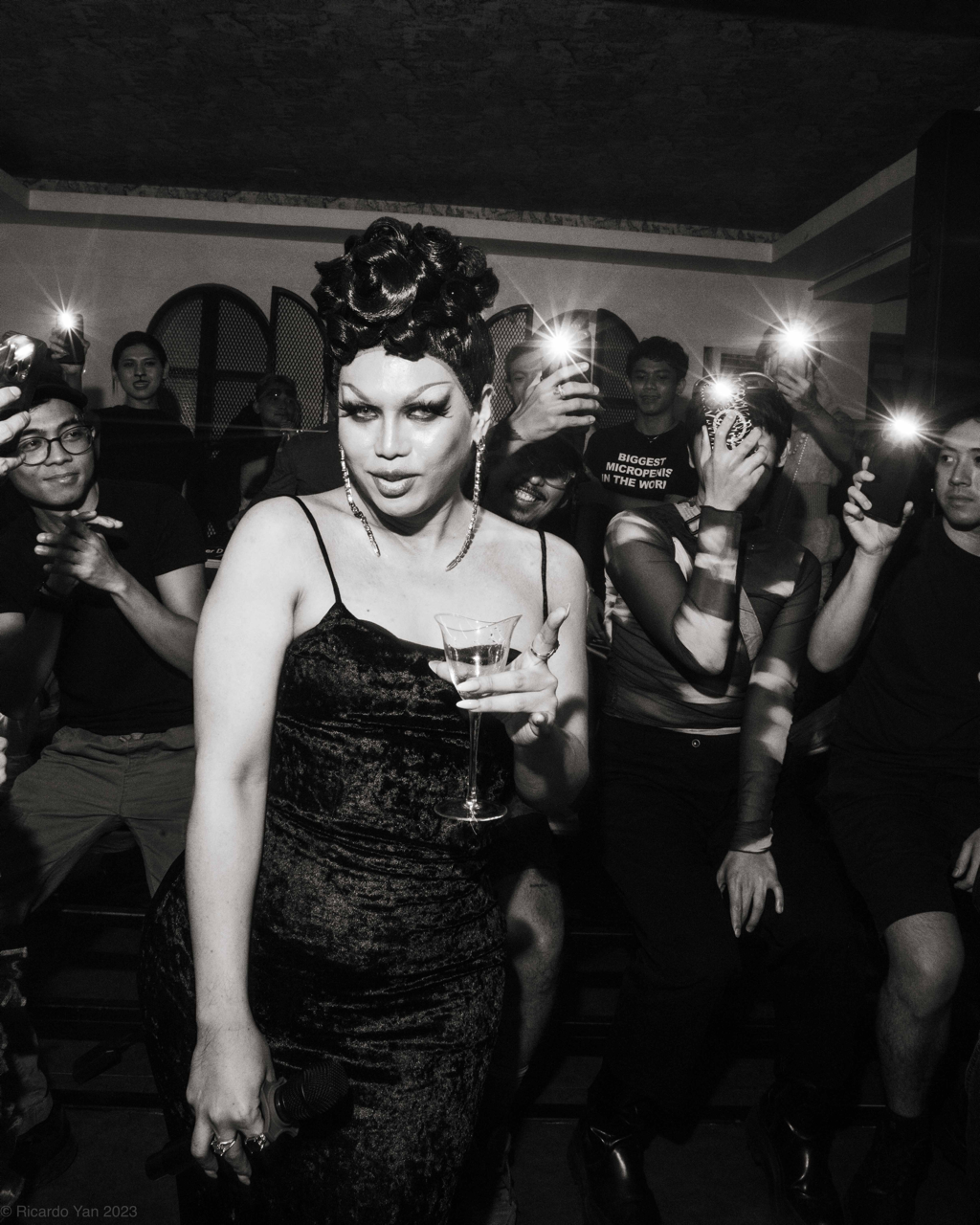
Today, That Elephant Party (also known as Elephant) sits among the most recognizable names in Manila’s nightlife scene. Its audience has grown far beyond the circles that first gathered around it. Its influence can be felt across queer nightlife, drag, techno music, and creative communities throughout the city.
But for Shahani, better known as Super Starlet XXX, the real achievement isn’t measured by attendance numbers or social media reach, but found in the people who grew alongside the party.
The young creatives who arrived looking for community and stayed long enough to become part of it. The aspiring DJs who found their sound. The photographers who found opportunities. The queer kids who found a place where they could finally be themselves.
“One of the best parts is seeing people grow,” Shahani says. “I’ve met so many people when they were still very young. Now, they’re DJs, designers, photographers, and professionals building careers both inside and outside nightlife.”

What started as a party eventually became something much larger.
“Build it and they will come,” they say. “There are other people like us who share the same energy. That’s the magic of Elephant.”
THE VALUE OF A SAFE SPACE
Long before “safe space” became a phrase brands placed on marketing decks and social media campaigns, queer communities were already building their own.
For Shahani, the difference between a genuinely queer space and one that simply markets itself as LGBTQIA+ friendly comes down to purpose.
“A queer space platforms and protects marginalized people,” they explain. “It’s where the most vulnerable members of the community feel the most confident to be themselves.”

That philosophy guided Elephant from the beginning. The original vision was straightforward: create an alternative space centered around the music they loved. Shahani describes it as the “queerification of techno,” driven by a desire to create room for sounds and experiences that weren’t always represented elsewhere.
Over the years, the mission may have evolved but the music remained central and the community became equally important. Especially after the pandemic when many people were forced to reconsider what connection meant and what kind of spaces they wanted to return to.
Now on its tenth year, Shahani says the intention behind Elephant feels clearer than ever. “It’s no longer just about the music. It’s about the value of having a community.” That clarity hasn’t come without challenges.
Maintaining intimacy while a community grows is a constant balancing act. “There were many challenges, definitely,” Shahani says. “Sometimes, it felt like pushing a boulder uphill but you overcome them and you count the achievements.”
WHAT HAPPENS WHEN THE UNDERGROUND GROWS?
The word “underground” follows Elephant wherever it goes.
It’s a label Shahani understands, though they laugh at the idea that Elephant still fully belongs there. We’re not exactly underground anymore,” they admit. “But we definitely have underground roots.”
As Elephant gained visibility, some might question whether growth might dilute what made the collective special in the first place, but Shahani sees things differently.
Underground culture has always produced success stories. They point to artists like Madonna, whose beginnings emerged from the underground scenes before finding mainstream success. Shahani believes that recognition doesn’t erase where someone came from. If anything, it creates new opportunities.
“Elephant is enjoying a lot of success and recognition right now, and that’s amazing,” Shahani says. “But we’re always focused on what’s next.”
And that means continuing to platform Filipino queer talent. Bringing in international artists while creating opportunities for local ones. Giving drag performers, DJs, and creatives the visibility they deserve because the underground’s power has always been the community.
“One of the beautiful things about Elephant is that I know the people there,” they say. “There’s a certain power in the underground’s ability to bring people together.”
And mainstream recognition, in their view, isn’t something to fear.
“It’s a gift. We should be grateful for it. We take care of it.”

WHY PRIDE FEELS DIFFERENT NOW
When asked what Pride means today for them, Shahani doesn’t begin with parades or celebrations but rather, community.
“Pride has become more personal for me and that shift reflects the current moment.”
Around the world, political leaders continue to disappoint marginalized communities. Corporate support that once appeared reliable feels more conditional than ever. Some brands that eagerly joined Pride campaigns a few years ago have noticeably stepped back.

In that environment, Pride becomes less about optics and more about the people.
Shahani points to moments like the Pulse nightclub shooting in Orlando and the killing of Jennifer Laude as reminders why representation remains important. These stories cannot be forgotten and visibility alone can’t just be the end goal.
Despite years of discussion, the SOGIESC Equality Bill remains stalled and progress often feels frustratingly slow.
“My fear is whether we’ll eventually lose the allies within the system who continue pushing for these things,” Shahani admits his concern.
Rights require constant advocacy but public attention shifts quickly. And with this, communities cannot afford to assume progress is permanent.
LIFE IS NOT LINEAR
Super Starlet XXX first emerged when Shahani was 18.
Initially, drag offered a way to express a side of themselves that wasn’t always possible elsewhere. Growing up in a Muslim household, femininity often had to exist outside the home.
Over time, drag became something deeper. Today, Shahani identifies as non-binary and gender-fluid, using they/them pronouns.
Their relationship with drag has also changed. These days, they describe it as more relaxed, more confident. The pressure to constantly prove themselves has softened with time.
There was a period when auditioning for Drag Race Philippines felt like something they needed to conquer. Three auditions later, the questions became more personal.
“Do I actually want this? Do I want that level of scrutiny online?,” The answers aren’t always simple but so is identity.
But Shahani seems comfortable with that uncertainty. After all, certainty has never been the point. “Life is not linear,” they say. “It’s fun. We doodle life.”

It’s the kind of line that feels small at first before revealing its weight because beneath the drag, the nightlife, the advocacy, that philosophy seems to guide everything Shahani builds.
Communities. Parties. Friendships. Movements.
A future that is kinder, more accepting, and more equitable that people can build together.
And for ten years on, the work for that future continues.
Author:
Next Up
%20-%20Website%20Thumbnail.jpg)