.png)
ORIGINALITY IN THE AGE OF AUTOMATION: WHAT AI’s 2026 TRAJECTORY MEANS FOR CREATIVES TODAY
The creative industry has always lived inside cycles of disruption. Photography unsettled painters, digital flattened production hierarchies, social media redefined distribution. But now, Artificial Intelligence (AI) is doing something subtler and perhaps more unsettling: it is making execution abundant.
According to Artlist’s 2026 Creative Trend Report, 87% of creative professionals already use AI tools in video creation, with two-thirds deploying them weekly. High-quality visuals – once gated by equipment, budgets, and teams – are now universal. Polish is no longer a competitive advantage, but a baseline.
Which raises the question many creatives are asking: If everyone can make something beautiful, what makes anything matter?
THE RISE OF THE AI AUTEUR
One of the report’s most striking claims is the emergence of AI Auteur, a creator whose value lies in taste and vision. The rise of “AI Creative Director” as a job listing in the market will soon be real.
AI may now handle the “how” (execution) but humans will still be responsible for the “what” (creative vision) and “why” (strategic purpose). Prompting, the report suggests, is becoming the new production skill but the real craft of it is conceptual: articulating vision, guiding tone, and making decisions inside infinite possibilities. Artlist frames this shift as the “Age of Taste” where the imagination becomes the bottleneck rather than the software.
It is an optimist reading of the moment. One that positions AI as an accelerant and not a replacement for creatives. Yet, optimism in the industry continues to coexist with caution.
AN INSIDE PERSPECTIVE ON CURIOSITY
That same optimism is mirrored in Rolling Stone Philippines’ Round Table episode on The State of the Local Creative Industry, featuring Gino Quillamor, Tin Gamboa, King “crwn” Punetespina, and Dan Villegas when they were asked “How does curiosity enhance creativity in your process?”
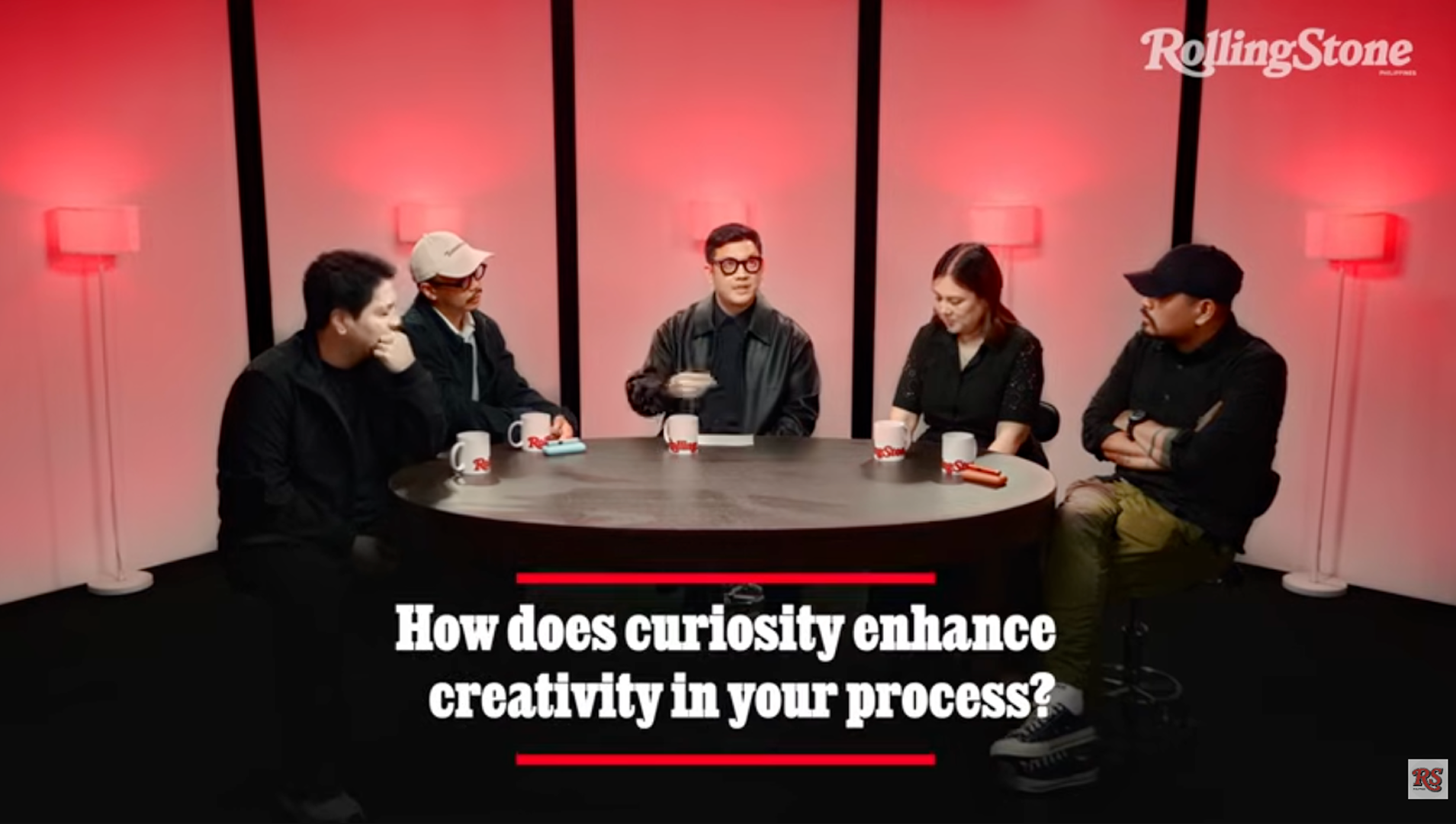
Quillamor’s words lingered, “Tempered curiosity will always yield great results.” He likened it to cultural resistance – how people once dismissed Game of Thrones only to eventually find themselves invested once they gave it a chance. Curiosity, he adds, expands the field of what we might love.
It is a generous posture. One that resists fear-based refusal while stopping short of blind adoption. And perhaps, as creatives, this is where many currently stand: Intrigued. Wary. Willing to experiment, but still asking the difficult questions.
SPEED CHANGES EVERYTHING
Artlist’s report makes one thing clear: AI is restructuring how work gets made.
Production is now circular – ideas generated, refined, discarded, rebuilt in rapid loops. Teams using AI tools report producing five to ten times more content with the same resources.
What used to take weeks now takes hours. In theory, this is liberating. Concepts once shelved due to time or budget constraints can finally exist but in practice, speed has consequences. When output multiplies, decision-making becomes another bottleneck. When iteration becomes infinite, discernment becomes the real labor. When everyone can produce constantly, restraint becomes radical.
The pressure continues to migrate.
From production to judgment, from making to choosing, from scarcity of tools to scarcity of attention.
AUTHENTICITY IN AN ERA OF SYNTHETIC MEDIA
Perhaps the most culturally loaded section of Artlist’s report concerns trust. As AI-generated imagery saturates feed, audiences increasingly ask: Is this real? And if not, what does real even mean now?
The report argues for what it calls “Authenticity 3.0”: radical transparency about AI use, behind-the-scene processes, and a commitment to distinct voice over visual spectacle. Some creators have already pivoted toward education, teaching audiences how to use AI. One reportedly doubled their following in a month by documenting their experimentation openly.
In this framing, authenticity does not mean rejecting AI but rather, a means of refusing to pretend it isn’t there.
THE COUNTER-TREND THAT IS REAL LIFE
As digital content becomes limitless, the scarcest commodity is no longer content; it is presence. Artlist predicts a rise in more “phygital” strategies using AI to prototype ideas quickly then investing in physical experiences that cannot be replaced by screens alone.
In a recent article by Neoreach on Phygital Marketing in 2026, smartphones become interpreting lenses for the physical world. Brands are turning storefronts, packaging, and in-store signage into digital access points that assist real-time decision-making and reduce uncertainty at the point of purchase, rather than merely trying to entertain. This means transforming everyday touchpoints into contextual interfaces that provide information, usage tips, and expert context as audiences physically engage with the product or environment.
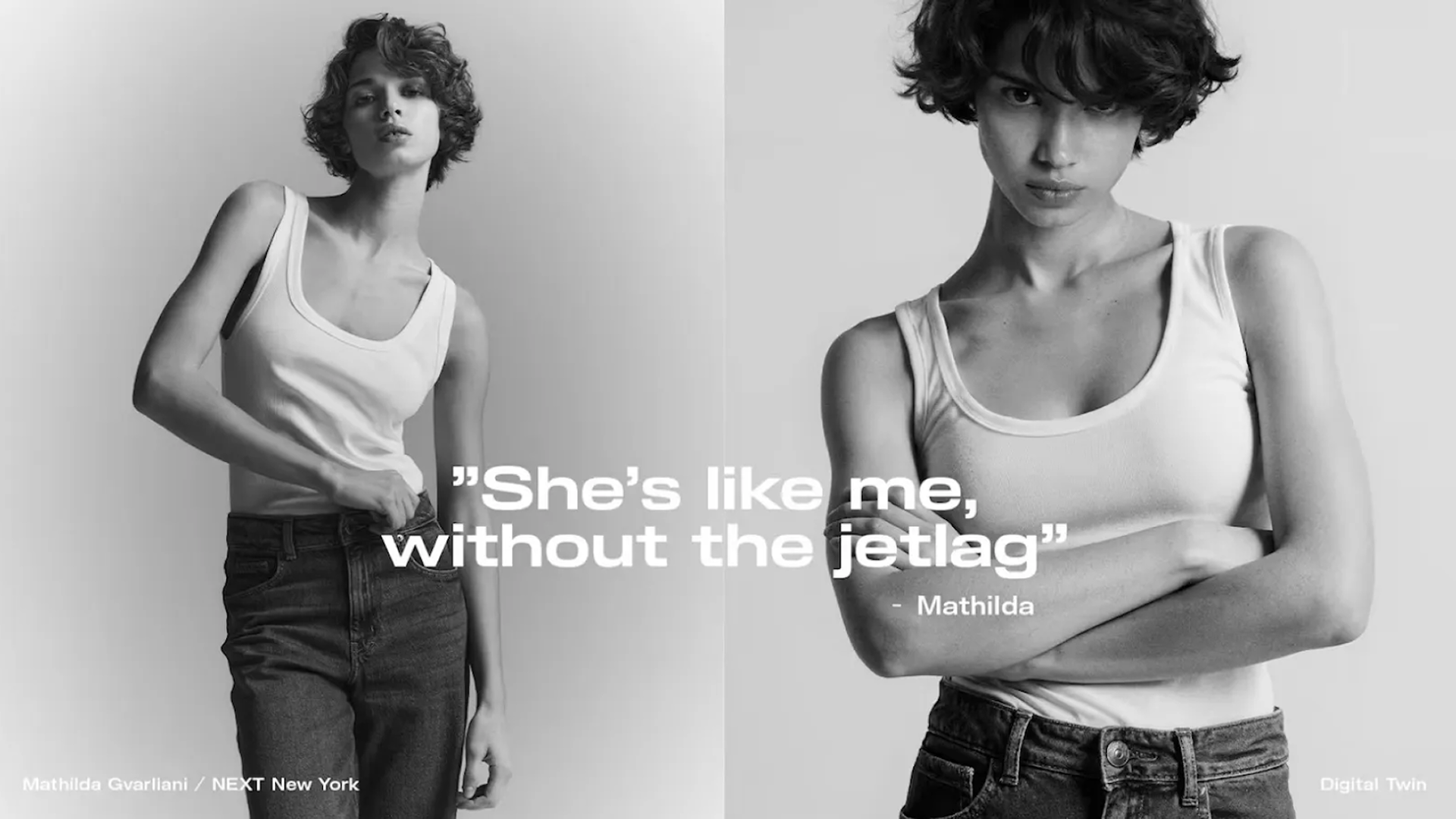
H&M offers another lens into how brands are navigating this hybrid future–this time from the creative production side rather than the sales floor. In one of their 2025 marketing efforts, the fashion retailer introduced AI-generated “digital twins” of real models for marketing and social media use, positioning the move as a way to increase efficiency and sustainability while preserving a human-centered approach. Each digital replica was created with consent, compensation, and visible labelling – an attempt to balance automation with trust.
While the initiative spanked debate across the industry, it underscores the same tension shaping phygital strategies: technology accelerating execution, while human presence, ethics, and authorship remain central to brand meaning. In this case, AI extends the physical world of fashion by allowing campaigns to be prototyped digitally while the cultural and emotional core stays anchored in real people. The experiment reflects a growing recognition that the future of brand experience will be negotiated carefully between innovation and embodiment.
THE ETHICAL QUESTION WE CAN’T SKIP
And yet, for many creatives – especially in regions where labor protections are fragile and payment structures are already uneven – AI’s acceleration feels less like an opportunity and more of pressure.
If a machine can generate ten drafts in seconds, does thinking get compensated?
If a creative uses AI, does that work still belong in the portfolio?
At what point does assistance become substitution?
These questions remain unresolved. And perhaps they should.
Curiosity does not require the suspension of ethics. Experimentation does not absolve responsibility. But being willing to try does not mean being willing to stop asking.
For many of us, the current stance is neither rejection nor surrender, but something quieter.
Trying the tools, watching the shifts, interrogating the systems forming around them. AI may be unavoidable but how it is integrated – who benefits, who is displaced, who decides – remains open.
What Artlist’s report ultimately underscores is not that machines are winning. It is that direction matters more than ever.
Perhaps the future of creativity is not defined by how sophisticated our tools become but by how carefully we choose what to make with them.
Author:
Next Up